- Category:
Small Business Energy Savings -
Last updated:
April 13, 2026
Guide to Switching Electric Companies for Small Businesses
Switching electricity providers for your business might sound complicated, but in many cases it’s a straightforward process. If you’re exploring your options or approaching a contract renewal, understanding how switching works can help you make a more confident, informed decision.
Switching your business electricity provider is simpler than most people expect:
- Your power stays on during the switch
- Your new supplier typically handles most of the process
- You can choose a plan that fits your business needs
- The timing depends on your current contract
If you’ve never switched before, it may be simpler than you expect. In most cases, switching electricity providers does not interrupt your service and is handled by your new supplier.
How does switching electricity providers work for businesses?
If you live or do business in states with a competitive electricity market, you typically have the ability to choose your electricity supplier. Some states allow businesses to compare providers and plans, giving you more flexibility in how you purchase electricity. This is often referred to as energy choice, where businesses can select a supplier that fits their needs.
Energy suppliers compete for your business, and in many cases, the switching process is simpler than expected. In most cases, your electricity service continues without interruption. Much of the process is handled behind the scenes.
If you’re exploring your options, it can help to understand how to choose an energy supplier and how to manage your business electricity costs.
When can your business switch electricity providers?
The timing of your switch usually depends on your current electricity contract. If you are in a contract already, many businesses choose to switch when their existing agreement is nearing its end.
If you’re currently under contract, it helps to review your terms to understand your options and any timing considerations before making a change.
What should you consider before switching energy suppliers?
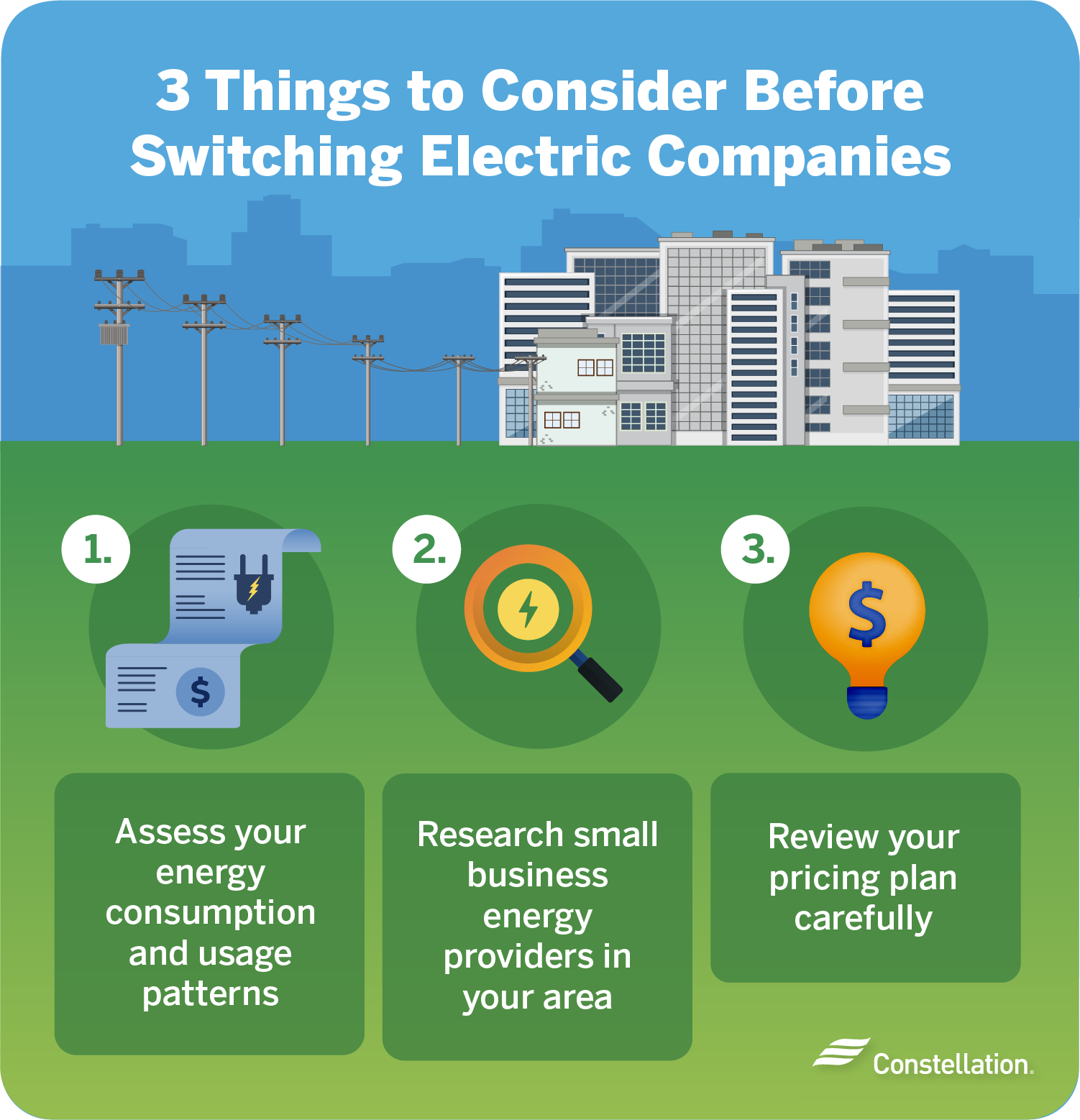
Before switching, it helps to review your current plan, understand your energy usage, and explore your options so you can make an informed decision.
1. Assess your energy consumption and usage patterns
Review your electricity bill to understand how much energy your business uses over time. You can estimate your business’s electricity costs annually to create a benchmark for comparison. This can help you create a baseline for comparing different plan options.
You should also familiarize yourself with the factors that influence small business energy costs so that you have the insights you need to shop for the best contract terms.
2. Research small business energy providers in your area
If you’re considering switching, it’s helpful to research available suppliers in your area. When researching, consider questions such as:
- Is the competitive supplier you’re considering well-established?
- Is the supplier licensed to serve your state?
- Are customer reviews on social media like Facebook and Twitter positive?
- How does the company fare on rating sites like Google, Yelp and the BBB?
- Are small business customers satisfied with this provider?
- How has the provider responded to customer service issues?
3. Review your pricing plan carefully
In addition to switching electric providers, you can switch pricing plans. Your business may benefit from choosing fixed vs. variable rate pricing. With a variable rate plan, your energy costs may change over time based on market conditions.
With a fixed rate plan, your rate stays consistent for the length of your contract, which can make budgeting more predictable. Your small business energy costs also include taxes, charges and fees, so examine the terms and conditions of any plan you’re considering with care.
Frequently asked questions about switching electricity providers
Are there any cases when you can’t switch to a new energy provider?
If your company operates in a competitive energy market, that means your business is generally free to switch electric companies. Check your agreement, however. If you signed an annual contract, you might be stuck with it until it expires. Energy providers may charge an early termination fee if you do decide to change to another provider before the end of your contract.
What should you know before signing an energy supplier contract?
As with any business deal, it pays to ask your new energy supplier the important questions before you sign on the dotted line. The answers may affect your decision or help you negotiate better terms.
What charges are included in the rate?
Be sure you know which components are included in your rate and which components, if any, are passed through and charged at market cost. Not all suppliers offer comparable products. A fixed rate with one supplier may not include the same components as a fixed rate with another supplier. To compare apples to apples, you need to know these details.
What happens at the end of the contract?
Make sure you know what is involved at the end of a contract before you sign. You don’t want surprises. The time to make sure the contract ends as well as it starts is at the beginning. You can save your business headaches and expenses. Ask about the renewal terms and next steps. You can create a mutually beneficial long-term relationship with this kind of advance planning.
What happens if there are changes in energy laws?
Sometimes changes in laws can cause electricity rates to go up. To the extent possible, try to find out what will happen to your business should changes occur. Your provider should be able to provide you with insights into what legislators are considering, but take the time to do a little research yourself and suggest terms that can protect you from any changes that could adversely affect your business.
Is there an early termination fee?
You can’t predict what changes might affect your business. That’s why having energy choice for your small business is so important. Keeping your small business energy options open can help give you some flexibility. Make sure you know if there is an early termination fee (known as an ETF) and how much it will be.
Can I switch electricity providers at any time?
It depends on your current contract. Many businesses switch when their agreement is ending, but some may have options earlier depending on their terms.
Will my power be interrupted if I switch?
No. Your electricity service continues as usual during the switch.
How long does switching take?
In many cases, switching takes a few days to a couple of weeks, depending on your contract and local utility.
Who handles the switching process?
Your new electricity supplier typically coordinates the transition for you.
Explore your small business electricity options with Constellation
Switching electricity providers can help you manage increasing power costs for your small business. If you’re starting to explore your options, you can learn more about how business energy plans work and what to look for as you evaluate what fits your business.