- Category:
Small Business Energy Savings -
Last updated:
July 9, 2026
How to Keep Your Business Cool in Extreme Heat
For many business owners, keeping their workplace cool in extreme heat is top of mind as the hot summer months approach. Rising temperatures do more than make people uncomfortable. Reduced productivity, lower employee well-being, stress on equipment and potential damage to inventory can all be negative outcomes of a heat wave. And high humidity only makes things worse.
Here, we’ll show you how to prepare your business for a heat wave, along with practical, affordable and effective ways to control humidity in your business spaces.
Why temperature control is critical for business operations
Understanding how to keep staff comfortable in extreme heat and protect your operations from the effects of high temperatures and humidity is vital in the summer. Whether due to climate change or global weather patterns like El Niño raising ocean temperatures, heat waves are expected to get longer and more intense.
Here are the main ways that controlling workplace temperature and humidity benefits your business:
- Boost productivity: Heat can cause fatigue and make it harder to concentrate. Employees work more efficiently in cooler, less humid conditions.
- Protect equipment: Heat and humidity can damage computers, electronics and machinery. Climate control helps prevent downtime and costly repairs.
- Support customer comfort: Customers are less likely to stay and spend money in uncomfortable spaces. Cooler environments can encourage longer visits and more purchases.
- Reduce moisture problems: High humidity can lead to mold, odors and damage to building materials.
- Promote health and safety: Cooler, drier conditions help reduce the risk of heat-related illnesses and mold-related health concerns.
- Prevent damage to materials: Excess heat and humidity can spoil, warp or degrade inventory and stored materials.
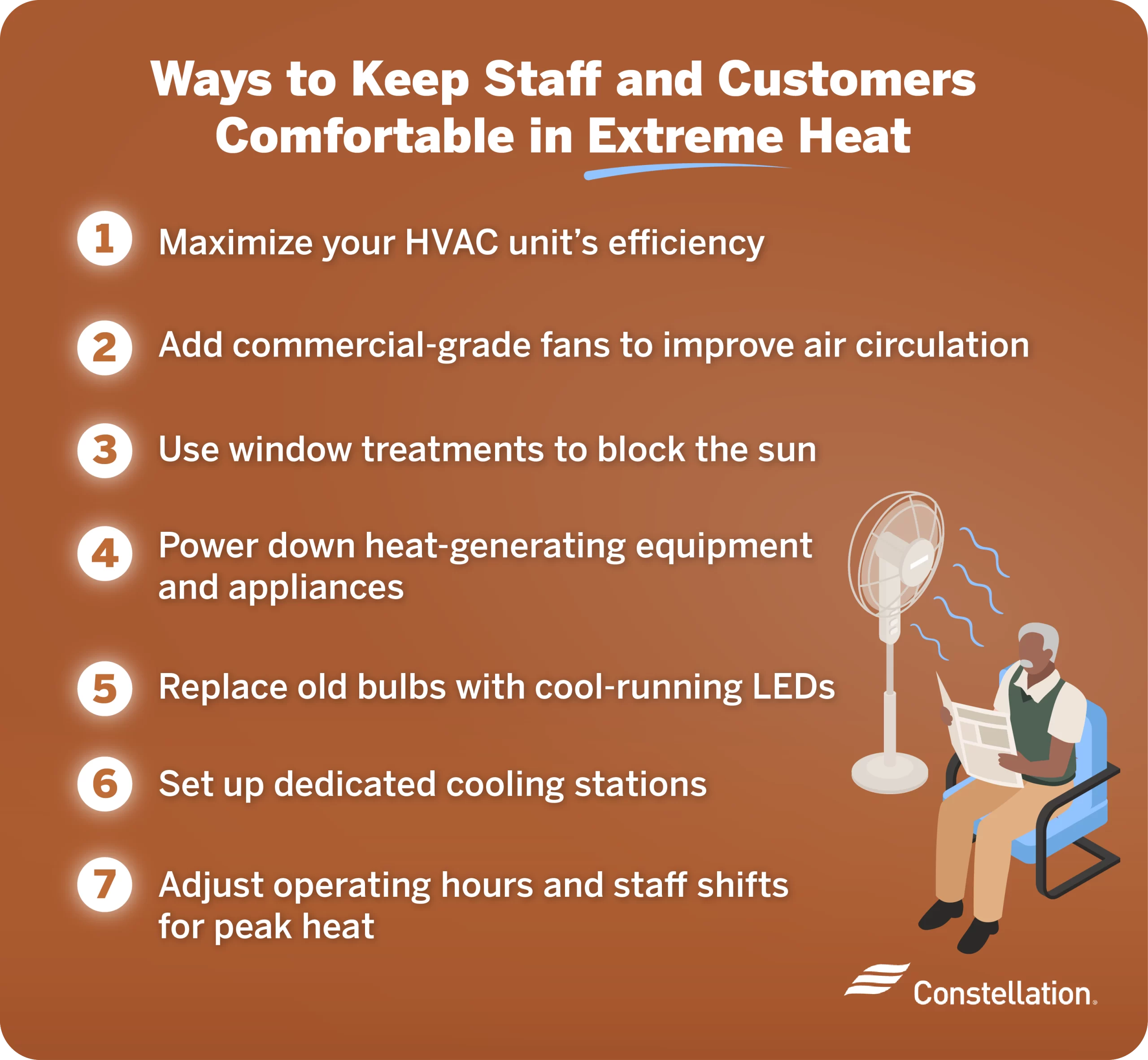
Ways to keep your staff and customers comfortable in extreme heat
Given the costs and risks, knowing how to keep a business cool in extreme heat and helping employees stay comfortable are priorities. The following strategies can make a big difference when temperatures are soaring, and they don’t require a large investment of time or money.
Maximize your HVAC unit’s efficiency
Start by assessing your HVAC system. When temperatures rise, you want to make sure the system is operating at peak efficiency. Replace the air filters, make sure the coils are clean and remove debris or anything that could block the vents.
An HVAC maintenance checklist can help ensure you don’t overlook critical steps. Scheduling a professional inspection that includes checking the refrigerant levels reduces the risk of breakdowns and expensive repairs.
Add commercial-grade fans to improve air circulation
While fans don’t lower temperatures, they do circulate air. Fans help moisture evaporate from the skin, making people feel cooler. They can also move cooler air near the floor higher up into the room, as well as vent hot air out. Commercial-grade fans that circulate air and even out temperatures help your HVAC system operate more efficiently.
Use window treatments to block the sun
A time-tested and low-cost strategy for keeping a workplace cool in extreme heat is using blinds, shades and solar reflective films to block out the sun’s heat before it enters your workspaces. Blocking solar heat can be an effective way to reduce your HVAC energy consumption.
Power down heat-generating equipment and appliances
Equipment and electronics emit a considerable amount of heat, even when idle. Whenever possible, turn off and unplug equipment that’s not in use. This minimizes power consumption and helps reduce the load on your HVAC system from heat output. It’s particularly helpful to shut down heat-producing devices when your business is closed.
Replace old bulbs with cool-running LEDs
Incandescent bulbs raise temperatures and waste electricity in two ways. They emit a considerable amount of heat, which means your HVAC system has to work harder. They’re also inefficient because most of the energy they use goes toward producing heat rather than light.
With LED bulbs, the opposite is true. Not only do they use much less electricity, but they also produce very little heat. Replacing incandescent bulbs with LEDs is a win-win for business owners.
Set up dedicated cooling stations for staff and customers
It may be difficult to cool certain workplaces, such as warehouses, manufacturing facilities or outside work sites. Creating cooling stations is a practical way to keep staff comfortable in extreme heat. Set up areas where workers can get cold drinking water, use cooling towels and spend time near fans and misting devices to provide some relief from the heat.
Adjust operating hours and staff shifts for peak heat
If your business operations allow it, you can schedule employee shifts for early morning or late evening to avoid the hottest hours of the day. You may also be able to reduce your business’s peak demand charges by shifting energy-intensive tasks to off-peak periods when rates are lower.
Controlling humidity in your business
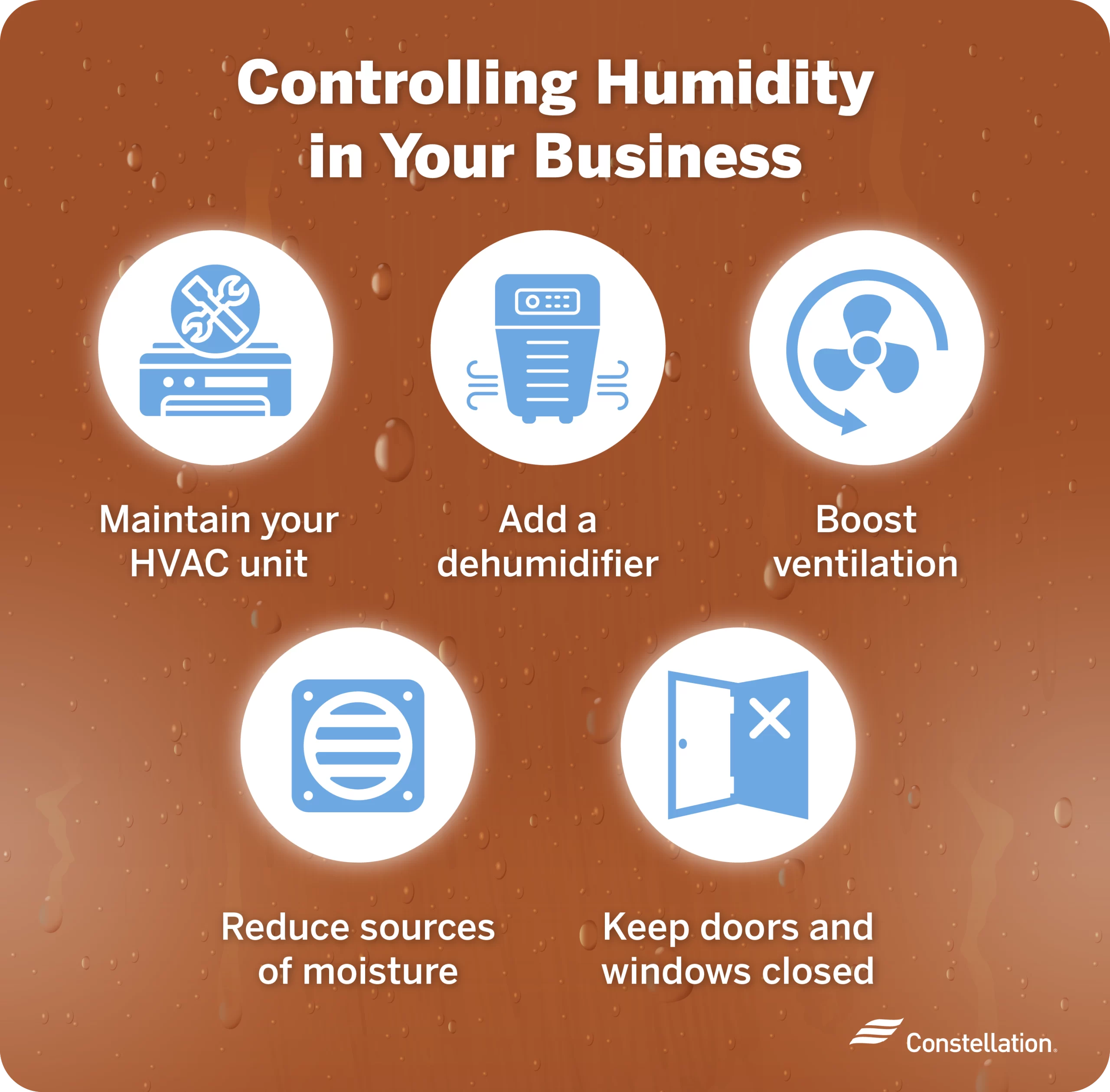
People are most concerned about high temperatures in the summer, but it’s just as important to think of ways to control humidity in your business. Excessive moisture in the air makes hot spaces feel even hotter and can affect the health of employees. Damp air also promotes mold growth, leads to unpleasant smells and can damage equipment and materials. That’s why addressing humidity is a key part of preparing your business for a heat wave.
Here are some tips:
- Maintain your HVAC unit: Your HVAC system plays a vital role in removing humidity from your workplace. Ensure its filters and vents are clear and that all moving parts are working efficiently to help keep your indoor air healthy.
- Add a dehumidifier: Commercial dehumidifiers can be highly effective at removing moisture in basements, warehouses, storage areas and other places prone to dampness.
- Boost ventilation: Keep air moving with fans that vent out humid air and bring in fresh air. Increasing ventilation can benefit kitchens, restrooms and manufacturing areas.
- Reduce sources of moisture: Check drains and any places where water tends to collect. Make sure water sources are covered and that shut-offs aren’t dripping.
- Keep doors and windows closed: Every time you open a door, hot, humid air flows into your spaces. Sealing your building and stopping drafts will help your HVAC system keep indoor conditions even.
What should indoor humidity be for businesses?
Having a clear target can help you control indoor moisture levels. The ideal indoor humidity is between 30% and 50%. An environment that’s too dry can be just as unhealthy as one that’s too moist. Keeping your indoor spaces within this range promotes health, reduces potential damage to equipment and materials and increases comfort when it’s hot outside.
Stay ahead of summer heat spikes
Knowing how to keep a workplace cool in extreme heat starts with preparation. Beyond keeping everyone comfortable, you can boost productivity, promote employee health, protect equipment and encourage customers to spend more time at your business.
Take some time before the temperature starts rising to check your HVAC system, seal your building, reduce heat sources and consider new work patterns and habits. Small steps now can have a big impact when temperatures begin to soar.