
Many companies have adopted the concept of shared workspace energy efficiency for a long list of reasons. Productivity, cost efficiency and the ability to maintain a comfortable and enjoyable environment are all directly connected to energy efficiency. By sharing lighting, climate control, appliances and more, you lower the amount of energy each worker uses. Understanding how coworking space energy efficiency works will help you make choices that further reduce your energy usage.
What is workspace right-sizing, and why does it cut energy waste?
Flexible workspace energy efficiency is closely linked to the concept of workspace right-sizing. Instead of heating, cooling and lighting large areas that are only partially used, you bring workers together in a smaller, fully occupied space. For example, instead of dedicating separate workspaces to each employee, a person who works remotely some of the time may be able to share a workspace with another worker on a coordinated schedule.
How shared and coworking spaces maximize energy efficiency
Better utilizing space and resources reduces how much energy each person requires. Consider these examples for lowering energy consumption:
- Pooled HVAC and climate control: The HVAC system controls the temperature for one occupied shared space instead of separate, often empty spaces for each person or team.
- Shared high-consumption equipment: Sharing energy-intensive printers, copiers, servers and routers means operating fewer machines and using less power.
- Consolidated breakrooms and amenities: When people share one breakroom, you need to operate fewer refrigerators, coffee makers, microwaves and dishwashers.
- Automated controls: You may enjoy a higher return on investment when purchasing smart office technology for shared spaces. Automation allows you to light and power spaces only when they’re in use.
- Cost-efficient space: Sharing workspaces, meeting areas and other amenities means there’s a smaller footprint to heat, cool and light and less equipment to operate.
Practical steps to safely downsize or sublease your workspace
When determining how coworking might help you save energy at your company, you’ll want to assess how much space you realistically need and how changes may affect people, equipment, materials and operations.
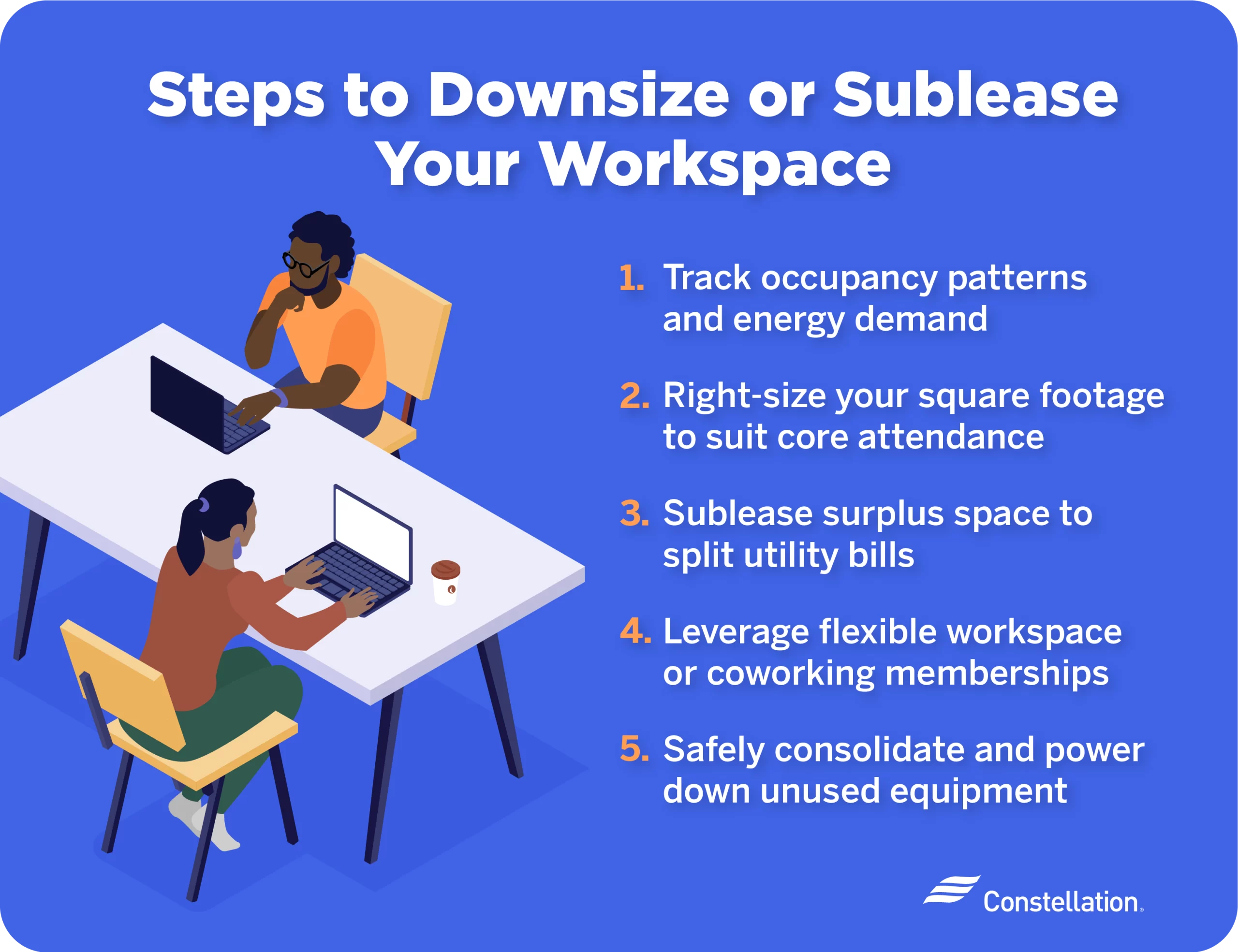

1. Track occupancy patterns and energy demand
Note how many people are physically in your workspace by time of day and day of week. Are there high occupancy and low occupancy days and times? How often is everyone on-site at the same time?
From there, compare occupancy with energy usage. Are you using the same amount of energy when your workplace is only sparsely populated? Answering these questions will give you important data to make right-sizing and shared workspace energy saving decisions.
2. Right-size your square footage to suit core attendance
Instead of maintaining a workspace for the maximum occupancy, right-size around your typical occupancy. If you use 80% of your usual energy demand when only 30% of people are present, it might be beneficial to downsize your space.
Another way to right-size is to determine how much power is used by each occupied seat vs. the amount of power used by all seats. If the number is high for occupied seats, you can trim waste by downsizing your space. Otherwise, you’re paying to light, heat and cool much more space than you need.
3. Sublease surplus space to split utility bills
If you’re locked into a lease and can’t immediately downsize, consider subleasing the space you don’t need. You may be able to bring in another business to use desks, offices or portions of your workspace. You may enjoy significant coworking space energy savings, earning rent while making better use of resources.
Check your lease terms to confirm whether you can sublease and share the cost of electricity with a business subleasing from you.
4. Leverage flexible workspace or coworking memberships
Instead of maintaining your own facility, look into coworking spaces that offer flexible workplace memberships. If you have many remote employees and experience wide variations in attendance day to day or week to week, these facilities offer you considerable flexibility. You can closely align the amount of space you need and the energy you consume with the number of workers on-site.
5. Safely consolidate and power down unused equipment
Right-sizing your workspace is the ideal time to inventory equipment and clear out devices you no longer need. A significant share of your energy waste comes from equipment that remains plugged in even when it isn’t in use.
Devices that stay plugged in and on standby mode while not in use continue to draw power. Decommissioning and unplugging servers, computers, printers and other equipment stops energy waste and boosts coworking space energy savings.
How to reduce energy waste in low-occupancy office areas
The increase in hybrid work schedules means that many companies are maintaining large workspaces that are no longer fully occupied much of the time. They still pay to light, heat and cool these areas, wasting energy and money. Here are several ways to reduce the energy consumption of little-used areas of your workspace. These tips can also help you save energy when your business is closed.
- Adjust HVAC set points: Keep temperatures within ranges that will protect your building, equipment and materials. You can often set your thermostat a little higher in summer and a little lower in winter to reduce the power your HVAC consumes.
- Install occupancy sensors: Sensors can turn lights on when people enter a space and turn them off when they leave. These sensors may also be set up to control your HVAC and other systems.
- Unplug phantom loads: Many electronics, such as computers, monitors, printers, charging blocks and appliances, draw power even when they’re in standby mode. Unplug anything that’s not in use to stop this energy waste.
- Turn off or dim lights: Keep lights off in empty rooms, and dim lights when you don’t need them at full brightness. Make use of natural light when possible.
- Consolidate workers: Bring people who are on-site together in closer proximity to reduce energy usage in empty areas.
- Seal off unused areas: When possible, close doors to separate occupied spaces from unoccupied ones. This keeps temperature-controlled air where your people are for better efficiency.
Building an energy-efficient future for your business
Pursuing your options for shared workspace energy saving can lower your overhead costs and help your business operate more efficiently. As work patterns continue to change, periodically reviewing how you use space and energy can help you stay flexible, lower your utility bills and keep your costs under control.