
After working hard all winter, components of your HVAC system may start to wear out. Dirt and debris can clog filters, build up on coils and block vents. Without routine care, your system may run less efficiently, break down more often and have a shorter lifespan. With a spring HVAC maintenance checklist, you can ensure your system receives thorough, regular service.
An HVAC spring maintenance checklist allows you to address all of your system’s key components and processes. It can help you manage regular system upkeep, guiding you through what parts to inspect for wear, which areas to clean and what elements to replace.
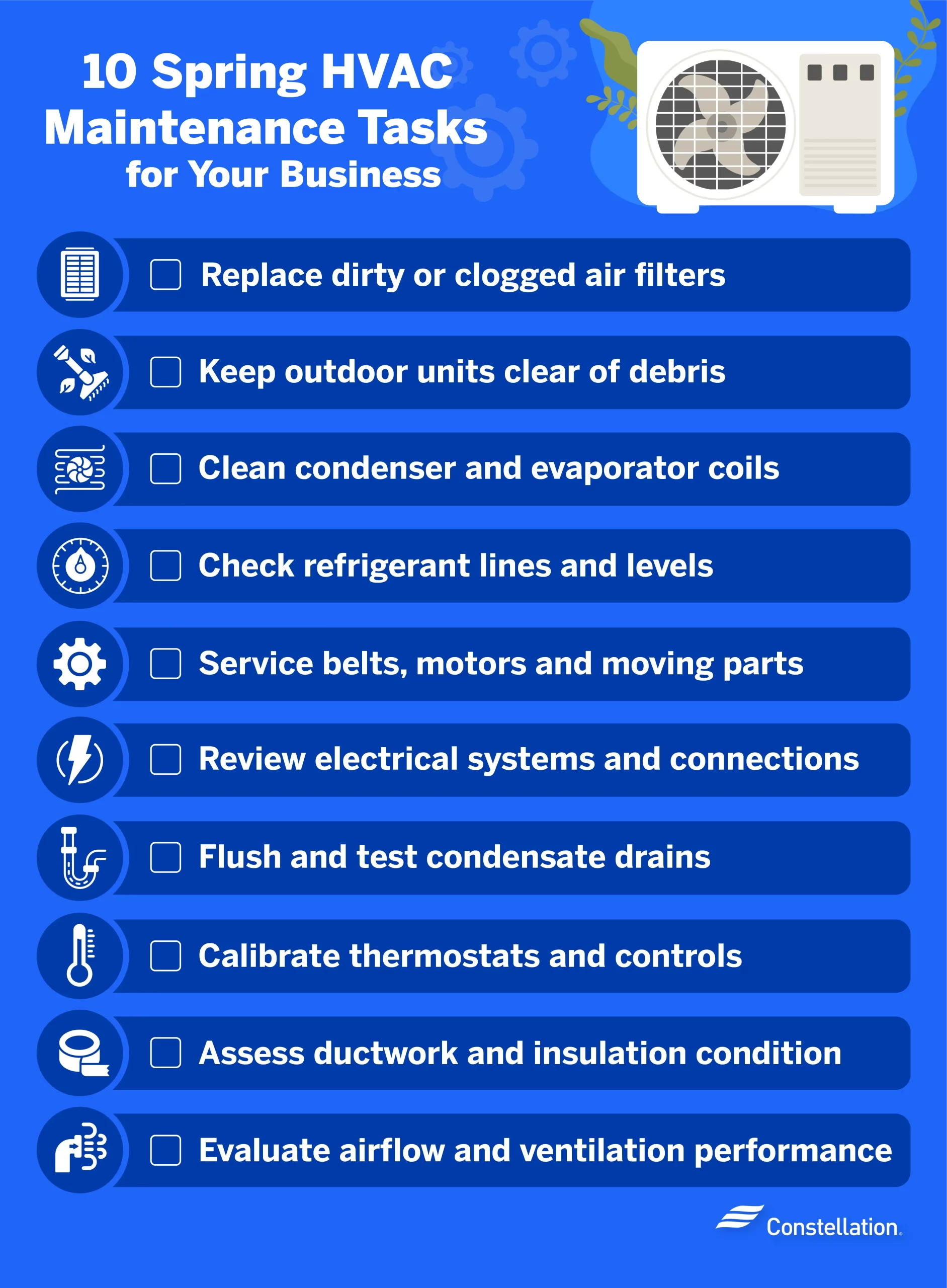
10 essential spring HVAC maintenance tasks for your business
Spring is the ideal time for seasonal HVAC maintenance. As the demand for heating declines, your system gets a break, making maintenance less disruptive to your business operations.
Here’s how to prepare your HVAC system for spring and summer:
1. Check and replace air filters
Replacing air filters is one of the fastest, simplest and most affordable maintenance tasks you can perform. Clogged filters make your system work harder, wasting energy and increasing wear. Dirty filters also trap dust and allergens less effectively, which can impact the comfort and air quality in your space.
To ensure the peak performance of your system, check the filters monthly and replace them every one to three months. While hiring a professional isn’t required for this task, you can call one if you need extra help.
2. Clear debris around outdoor units
Another simple yet effective task on your spring HVAC maintenance checklist is removing debris from around your outdoor condenser unit. Leaves, grass clippings, dirt and trash can build up and block the free flow of air. Keeping a two- to three-foot perimeter clear ensures your system runs efficiently. This task generally doesn’t require professional help and can be done regularly by yourself throughout the year.
3. Clean condenser and evaporator coils
Dirt buildup can negatively affect your HVAC system’s efficiency. The key areas to keep clean are the condenser and evaporation coils. If grime builds up on these components, they can’t absorb and release heat efficiently. Your unit will then have to work harder to maintain comfortable temperatures, driving up energy usage and leading to greater wear and tear.
Coil cleaning requires specialized tools and cleaning solutions to avoid damaging the fins and tubes. You can schedule a professional cleaning as part of your seasonal HVAC maintenance program.
4. Check refrigerant lines and levels
Refrigerant is the specialized fluid in HVAC systems that absorbs heat from inside your space and releases it outside. It’s an essential component of your system, and maintaining the right refrigerant levels and sealing any leaks in the refrigerant lines ensures your system operates efficiently. A thorough inspection by an HVAC professional can identify signs of wear, locate leaks and check refrigerant levels.
5. Inspect belts, motors and moving parts
Worn components, loose belts, aging motors and unlubricated parts not only move air inefficiently but can also lead to system failure. An inspection by a professional technician can uncover issues before they result in downtime or costly repairs. They’ll be able to replace worn parts to extend the lifespan of your unit and ensure it continues to operate efficiently.

Download the spring HVAC maintenance checklist (PDF)
6. Inspect electrical components and connections
The safety and dependability of your unit depend on well-maintained electrical circuitry. Loose wires, corroded connections and failing capacitors can all affect the safe operation of your HVAC system. These problems often occur when demand for cooling is highest.
Because HVAC electrical components are complex and can pose a safety risk for anyone not trained to service them, it’s important to hire an HVAC professional to check voltage, repair connections and replace parts. This keeps your system operating safely and efficiently.
7. Clear and test condensate drain lines
The cooling process creates condensation that must be properly drained. However, dirt, algae and debris can clog and contaminate drain lines, causing water backup, high indoor humidity and mold and bacterial growth. A professional HVAC technician can test drainage lines, flush them clean and ensure your unit remains compliant with safety standards.
8. Check thermostats and building controls
Your thermostat setting can directly impact the efficiency of your HVAC system. The wrong settings, sensors that don’t work properly or outdated units can all make your system work harder and run longer than needed. Checking these issues should be on your HVAC spring maintenance checklist.
Raising your thermostat a few degrees can help save energy, while using a programmable system that adjusts temperatures during the day and outside of business hours can help improve efficiency. It’s important to ensure that any sensors and controls are calibrated or updated as needed to help your system run optimally and maintain comfort throughout the summer.
9. Examine ductwork and insulation
Properly maintained ductwork ensures that cooled air flows smoothly into your space. Poorly insulated ducts, leaks and debris buildup can make it harder for your system to circulate air and also contribute to the spread of allergens.
Given the difficulty of accessing ductwork, you’ll need a professional inspection to uncover and fix any problems. Sealing and cleaning ductwork is just one way you can make your space energy efficient. Sealing doors, windows and other gaps will also help your HVAC system operate at peak performance.
10. Verify airflow and ventilation
Ensuring that cool air flows freely and evenly is the key to comfort and optimized system performance. Check for blocked vents, airflow imbalances and poorly ventilated areas, as poor airflow can strain your system and reduce indoor air quality. Hiring a trained technician who has the proper tools to measure system balance and ventilation rates will help you identify any system changes or upgrades needed.
Why spring HVAC maintenance matters
Using a spring HVAC maintenance checklist and scheduling professional service is an effective way to make sure your system provides dependable service throughout the summer. When you address issues proactively, you help lower the risk of unexpected breakdowns and expensive repairs. You also optimize performance for peak energy efficiency and extend the lifespan of your system.
Here are some of the benefits of regular spring HVAC maintenance:
- Improved energy efficiency: Achieve lower energy consumption and peak performance with a well-maintained system.
- Increased comfort: Enjoy consistently cool temperatures all summer long.
- Better air quality: Maintain healthy humidity levels with clean air that’s free of allergens, pathogens and pollutants.
- Prolonged system lifespan: Extend the lifespan of your HVAC system by conducting routine maintenance to limit system strain.
- Greater dependability: Reduce the risk of your system breaking down and requiring expensive emergency repairs.
- Potential cost savings: Minimize your energy expenses by reducing energy waste through regular spring HVAC maintenance.
Prepare your business for comfort and efficiency
Use an HVAC spring maintenance checklist as part of your regular spring cleaning routine. You can perform simple tasks such as replacing air filters, removing debris and keeping vents clear, while a professional can inspect your system and service electrical components and moving parts, along with refrigerant levels, lines, coils and ducts.
While optimizing your HVAC system is key to ensuring dependable summer service, preparing the rest of your property is also important. You can enhance comfort, health, safety and energy efficiency throughout your building by taking a facility-wide approach. This way, your building, systems and operations will enjoy peak performance throughout the summer and beyond.